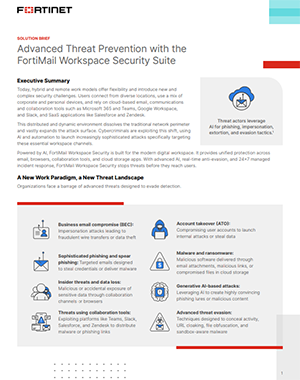



What was once centered on email and a corporate network now spans browsers, collaboration platforms, and a growing ecosystem of SaaS applications. Employees regularly switch between tools like document sharing platforms, messaging apps, and cloud-based business systems throughout the day. That flexibility drives productivity, but it also expands the attack surface in ways that many organizations are still working to fully understand.
Each of these touchpoints introduces its own set of risks. A malicious link clicked in a browser session, a compromised file posted in a collaboration tool, or unauthorized sharing of data within a SaaS application can all become entry points for attackers. When security strategies are focused on email alone, these additional avenues create blind spots that are difficult to detect and even harder to control.
This shift has forced security leaders to rethink what “workspace security” actually means. It is no longer confined to simply filtering incoming email messages or scanning attachments. Instead, it requires visibility and protection across the entire digital workspace where users work and collaborate. As the workspace expands, so must the scope of defense.
Even within email itself, the threat landscape has changed. Attacks have become more targeted, more credible, and far more difficult to detect than they were just a few years ago.