

Call a Specialist Today! 800-886-5787 Free Shipping! Free Shipping!


Fortinet Platinum Partner

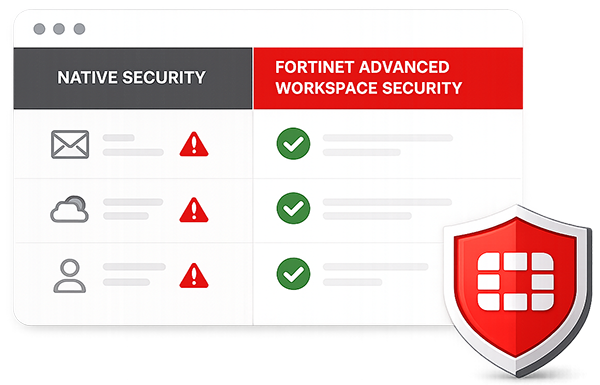
Native Security Has Limits. See What Advanced Protection Adds.

Microsoft 365 and Google Workspace provide a baseline — but today’s threats span email, browsers, collaboration tools, and SaaS apps. This guide shows security leaders exactly where native controls stop and advanced protection picks up.
Integrated Email Defense and Workspace Security

Get The Guide

The Microsoft 365 & Google Workspace Security vs. Advanced Workspace Protection Comparison Guide compares native security controls with a more layered protection model. While Microsoft 365 and Google Workspace provide essential baseline security, today’s threats move across email, browsers, collaboration tools, and SaaS applications, opening visibility gaps that slow detection and response.

WAN Team image

Fill out the form to access your free guide

Trusted by IT teams evaluating advanced workspace protection

Compare Native Security vs. Advanced Workspace Protection

This guide maps capabilities side by side across the areas that matter most — so security and IT leaders can see exactly where native controls provide coverage and where gaps remain.

Security Capability Native Productivity Suite Fortinet / Advanced Workspace Protection
AI-Driven Phishing Basic Behavioral models and layered inspection
Email Security Depth Native filtering and basic anti-phishing Enhanced email protection with tools such as Fortinet FortiMail
Browser Security Limited Dedicated protection
Collaboration App Scanning Partial Full content scanning
Data Loss Prevention Basic policy rules Behavioral monitoring
Insider Risk Detection Limited Full context visibility
Incident response Slow, due to manual processes Faster, due to managed and automated response services

More capabilities covered in the full guide

Download the Full Comparison

Why Organizations Are Expanding Beyond Native Security

Threats are no longer confined to a single entry point. They unfold across email, browsers, collaboration tools, and SaaS applications — and native security controls weren't designed to follow them across all of those channels.

AI-Powered Phishing

Attackers now generate highly personalized messages that reflect an organization's tone, structure, and context — bypassing traditional filtering that relies on known indicators. Experts estimate phishing will play a part in 42% of all global breaches in 2026.

Account Takeover

When attackers gain access to a legitimate account, they operate within a trusted environment — sending internal messages, accessing sensitive data, or initiating transactions — often evading detection for extended periods. The FBI reported ATO fraud caused over $262 million in losses in 2025.

Insider Data Leaks

Data exposure frequently occurs through everyday actions such as oversharing files, misconfiguring access permissions, or transferring data without proper oversight — whether intentional or accidental. 56% of organizations experienced an insider threat incident in 2025.

Tool Fragmentation

Email protection, identity management, data policies, and collaboration controls may each operate in separate areas of the platform, requiring teams to navigate multiple interfaces to piece together a complete picture of an incident.

Operational Overhead

Security teams must spend more time correlating alerts, investigating incidents across different tools, and manually determining the scope of a threat — straining resources and reducing the team's ability to focus on higher-priority risks.

Blind Spots

When visibility is limited to specific layers such as email or identity, activity that occurs in browsers, collaboration tools, or SaaS applications may go unnoticed — allowing threats to progress without detection, especially when attackers move between channels.

Ready to Strengthen Your Workspace Security?

If you're evaluating where your current security posture has gaps, our team can help you assess coverage across email, browsers, collaboration tools, and SaaS applications — and identify where advanced protection makes the most impact.